
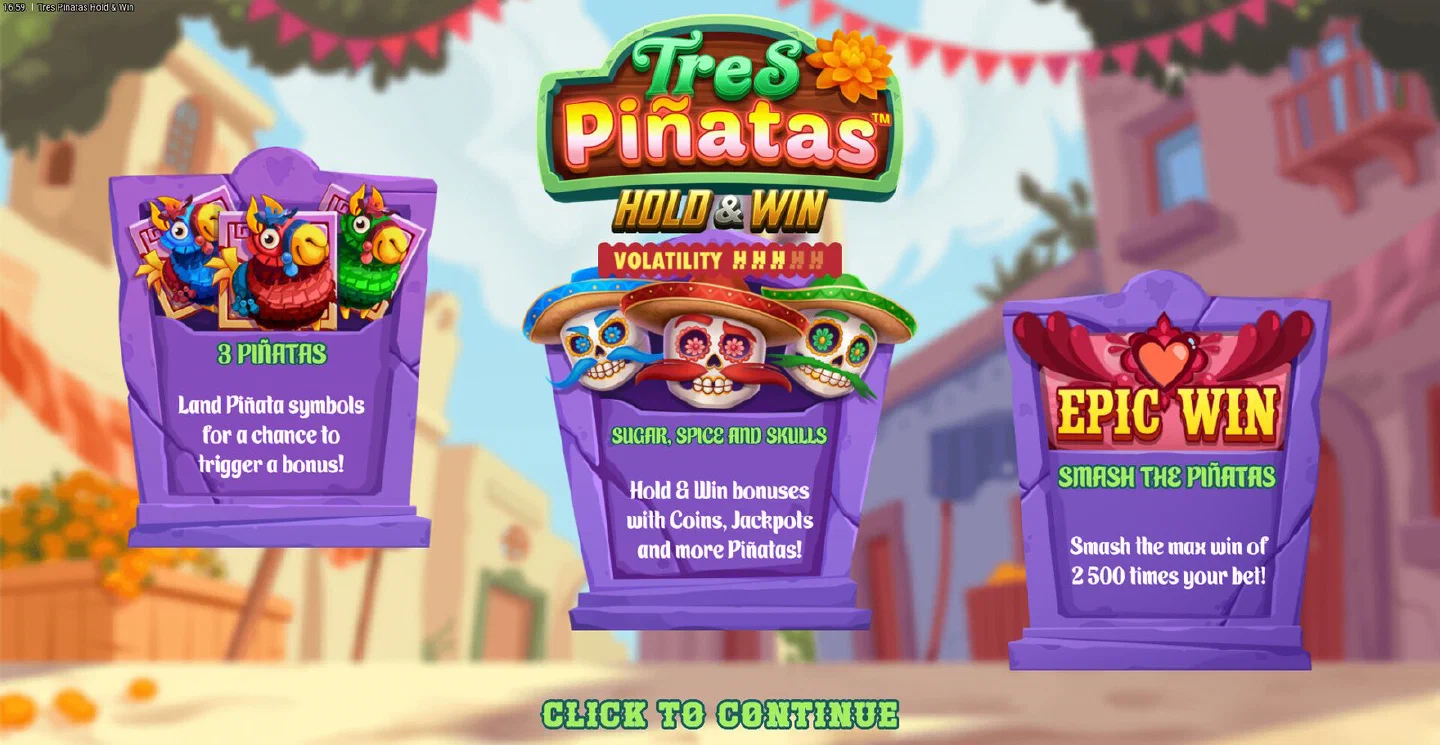
Tres Pinatas Hold & Win
Provider game id 2362, released on 3 September 2026: a 5x3 grid on 9 lines with the Piñata Party bonus and a 2,500x ceiling.
The studio that builds its bonuses around one room. Tres Pinatas Hold & Win is its September 2026 fiesta: 9 lines, three refilling lives and a 2,500x ceiling.
// PROVIDERS
// GAMES
Two titles and two house habits, and where each one is covered in full.
Provider game id 2362, released on 3 September 2026: a 5x3 grid on 9 lines with the Piñata Party bonus and a 2,500x ceiling.
The same studio on the same 5 reels x 3 rows, 9-line frame, with a different character in the bonus. Our head-to-head sets them side by side.
A mode that stays on until you switch it off and makes each spin ten times likelier to open the bonus, priced at 5x the stake per spin.
Collect rounds where Coins and Jackpots stick and refill the lives, with fixed jackpot rungs and published returns for every purchase path.
// GAME FACTS
What the studio prints for its current showcase title.
| Fact | Value |
|---|---|
| Release date | 3 September 2026 |
| Grid | 5 reels x 3 rows |
| Paylines | 9, left to right from the leftmost reel |
| RTP | 96.26%, 94.30%, 92.32%, 86.29% the four published configurations |
| Volatility | 3 / 5, labelled Medium |
| Max win | 2,500x the bet |
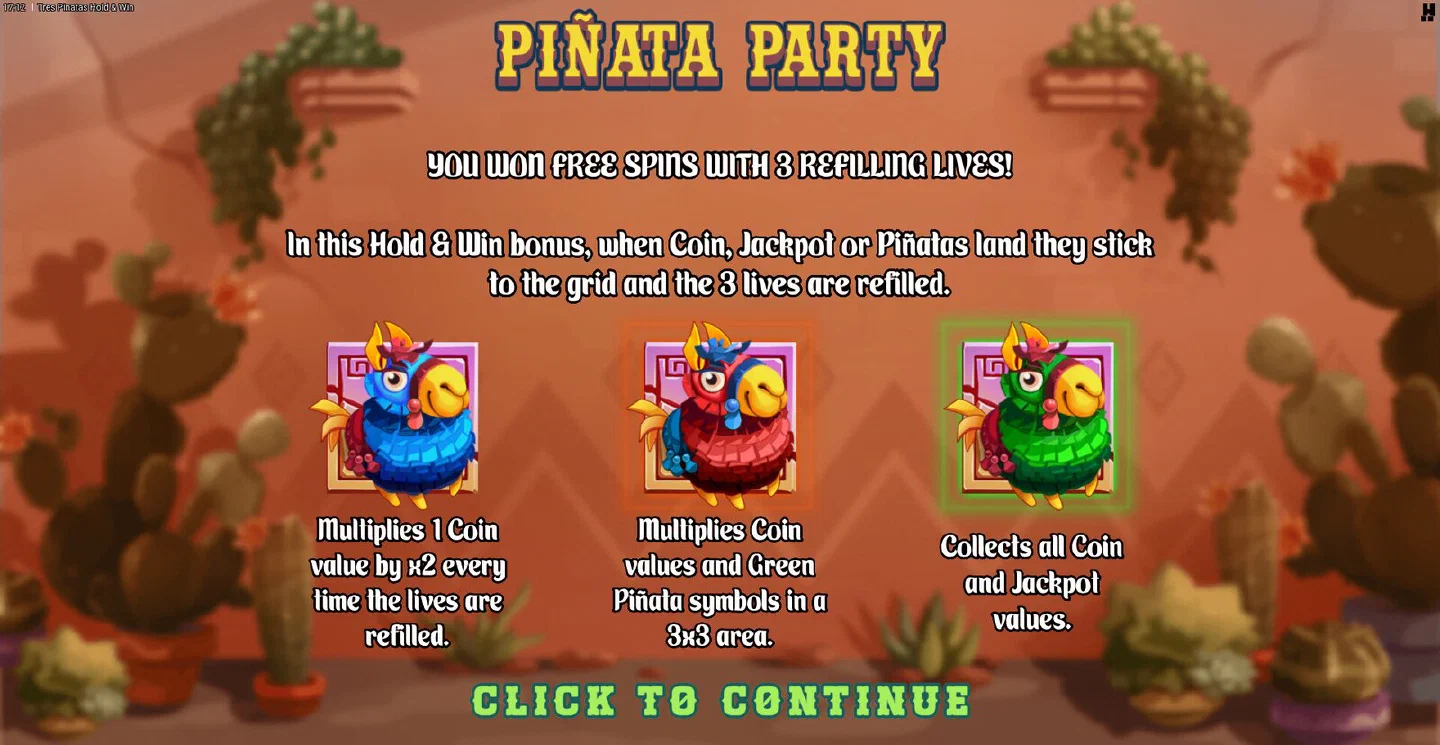
| Bonus | Piñata Party, a Hold & Win with 3 refilling lives |
Every studio has a signature, and Hacksaw Gaming’s is concentration: one feature, built properly, with the rest of the game arranged to deliver you into it. Tres Pinatas Hold & Win is the clearest example on the shelf right now, so this page uses it to explain how the studio works.
Hacksaw Gaming trades as HGMT Ltd, a Malta company with registration C84111. It supplies games to licensed operators rather than running a casino of its own, which is the distinction that matters when you read the licence list further down: those licences describe the studio, not the table you sit at.
The studio runs its own game launcher, which is worth more to a player than it sounds. Open a Hacksaw title anywhere and you get the same client: the same menu, the same GAME INFO panel with the return printed in it, the same round history, the same keyboard shortcuts. It is also why the demos work everywhere, including the one running on our demo page .
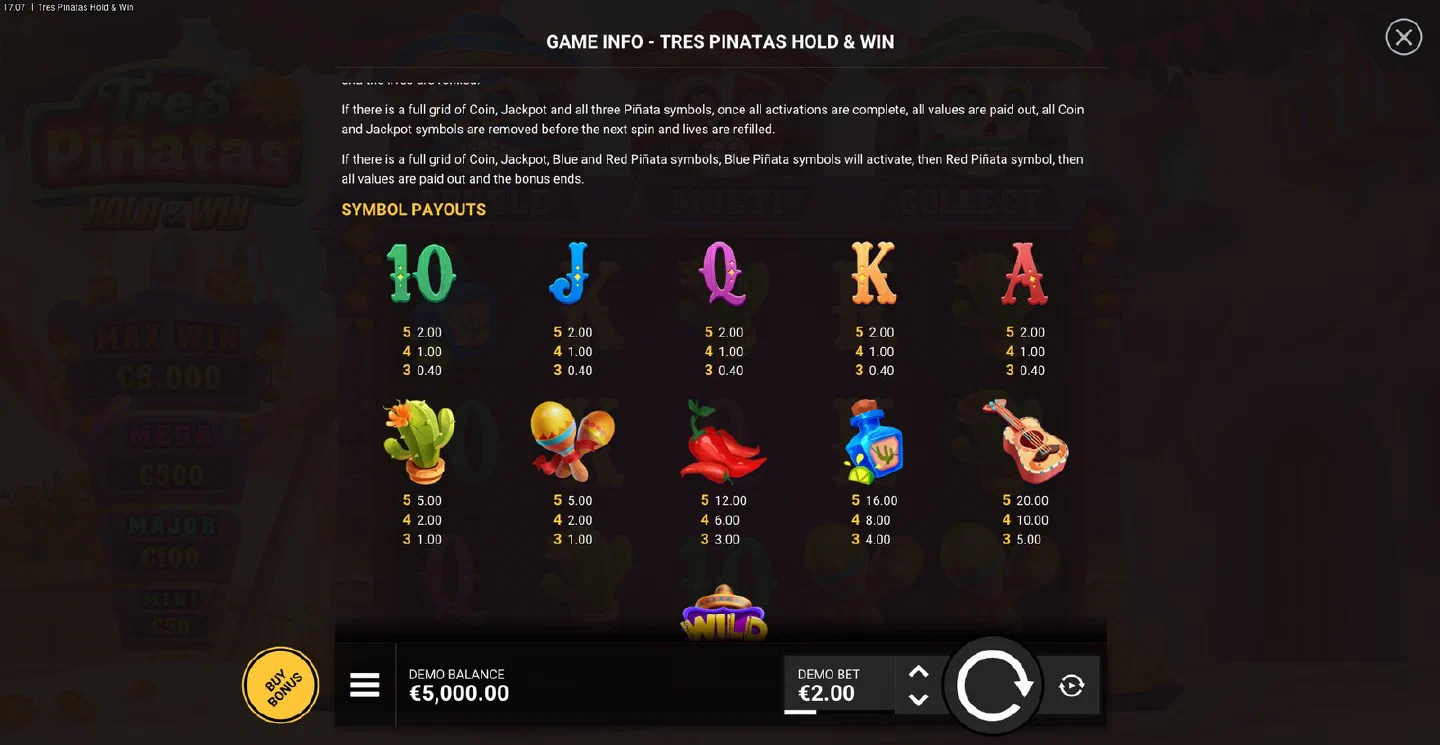
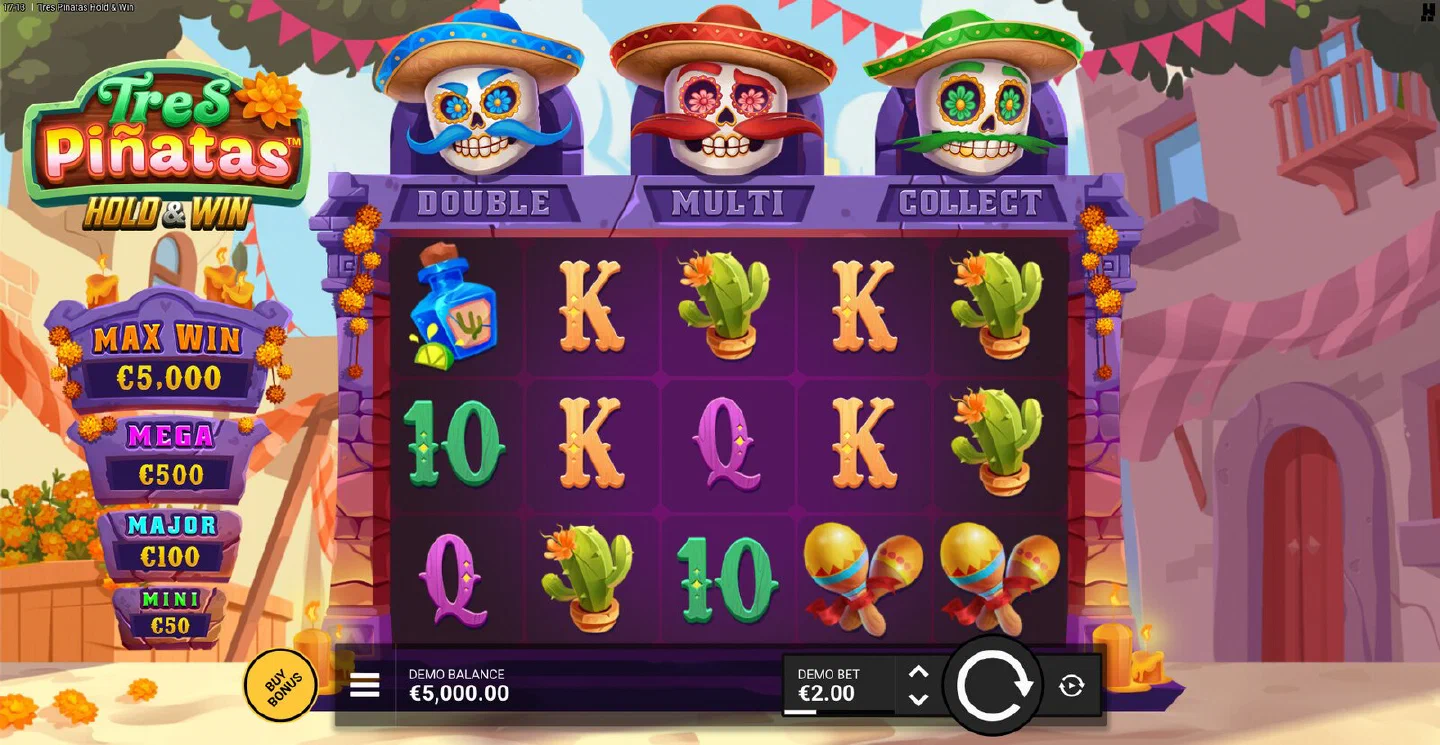
Tres Pinatas Hold & Win, released on 3 September 2026 as provider game id 2362, is the current showcase. A 5x3 grid, nine paylines, a fiesta theme carried by guitars, tequila, chillies, maracas and a cactus, and a single bonus behind all of it. Our full review covers how well it plays.
Eight regulators, one supplier. The numbers below are the studio’s own registrations, printed exactly as the regulators record them.
| Regulator | Registration |
|---|---|
| Malta Gaming Authority | MGA/CRP/501/2018, valid to 2028-12-05 |
| UK Gambling Commission | 000-054059-R-331396-002 |
| Hellenic Gaming Commission, Greece | HGC-000055-MN |
| ONJN, Romania | L2223924Y001379 |
| AGCO, Ontario | GRSM1241574 |
| Spelinspektionen, Sweden | B2B gaming software licensee |
| Spillemyndigheden, Denmark | 24-432338 |
| Gambling Supervision Commission, Isle of Man | software supply licensee |
What a shelf like that tells you is about process rather than luck. A studio answering to this many regulators at once builds one client and one set of rules that has to satisfy all of them, which is why the same GAME INFO panel, the same limits and the same published return appear in every title. It says nothing about any individual casino, and this page names none.
The same toolbox turns up in every title, and knowing it makes any Hacksaw game quicker to read:
Put together, that is a studio that expects you to check things: the return, the price of a purchase, what the last round actually did. The features page shows the toolbox at work in this game.
The launcher is the quiet reason a Hacksaw title behaves identically wherever you open it.
The studio runs its own, and the address it opens from carries no version number, so the page resolves whichever client build is current at the moment you press play. Practically, that means a link to a Hacksaw demo keeps working after the game is updated, which is why the free demo on this site loads the live build of Tres Pinatas Hold & Win rather than a snapshot.
It also means the furniture travels. The GAME INFO panel with the published return in it, the paytable, the round History, the autoplay limits, the BUY BONUS control and the keyboard shortcuts are the same objects in every title from the catalogue. Learn them once and every Hacksaw game you open afterwards is already familiar.
And it explains why the demo is genuinely the full game. The client is the client; only the balance behind it changes when you switch to a real table.
A studio can be judged by how much it prints, and this one prints a lot. In Tres Pinatas Hold & Win alone, the published set runs to four RTP configurations, three more returns for the purchase paths, a volatility rating, a maximum win, a bet range, a full Coin ladder and four jackpot values.
| What is published | For this game |
|---|---|
| Base configurations | 96.26%, 94.30%, 92.32%, 86.29% |
| Purchase returns | 96.28%, 96.28% and 96.34% |
| Volatility | 3 / 5, labelled Medium |
| Maximum win | 2,500x the bet, reachable in every bonus mode |
| Bet range | €0.10 to €400.00 per spin |
| Coin values | 1x to 500x across four tiers |
| Jackpots | 25x, 50x, 250x, 2,500x |
Two details in that list are unusual. The first is that the purchase returns are published at all, and that they sit at or above the base build rather than below it. The second is that the volatility rating and the ceiling are both printed on the intro splash, before you have spent anything. The RTP page works all of it through at real stakes.
Put a price on how much that transparency is worth and the argument gets concrete. The published spread between the top configuration at 96.26% and the fourth at 86.29% is just under ten percentage points of long-run return, and the only thing standing between you and the right side of it is a ten-second look at GAME INFO. A studio that prints the number in the client, in every title, on every table, is a studio that makes that check possible at all, and it is the single habit of Hacksaw’s that a player can actually convert into money. Make it at every new casino before the first spin.
If you want the method in a single game, this is it. Five reels, three rows, nine paylines paying left to right from the leftmost reel, and a volatility rating of 3 / 5. The base game has no feature of its own and is not supposed to: its job is to land three coloured Piñatas whose Skulls open the round.
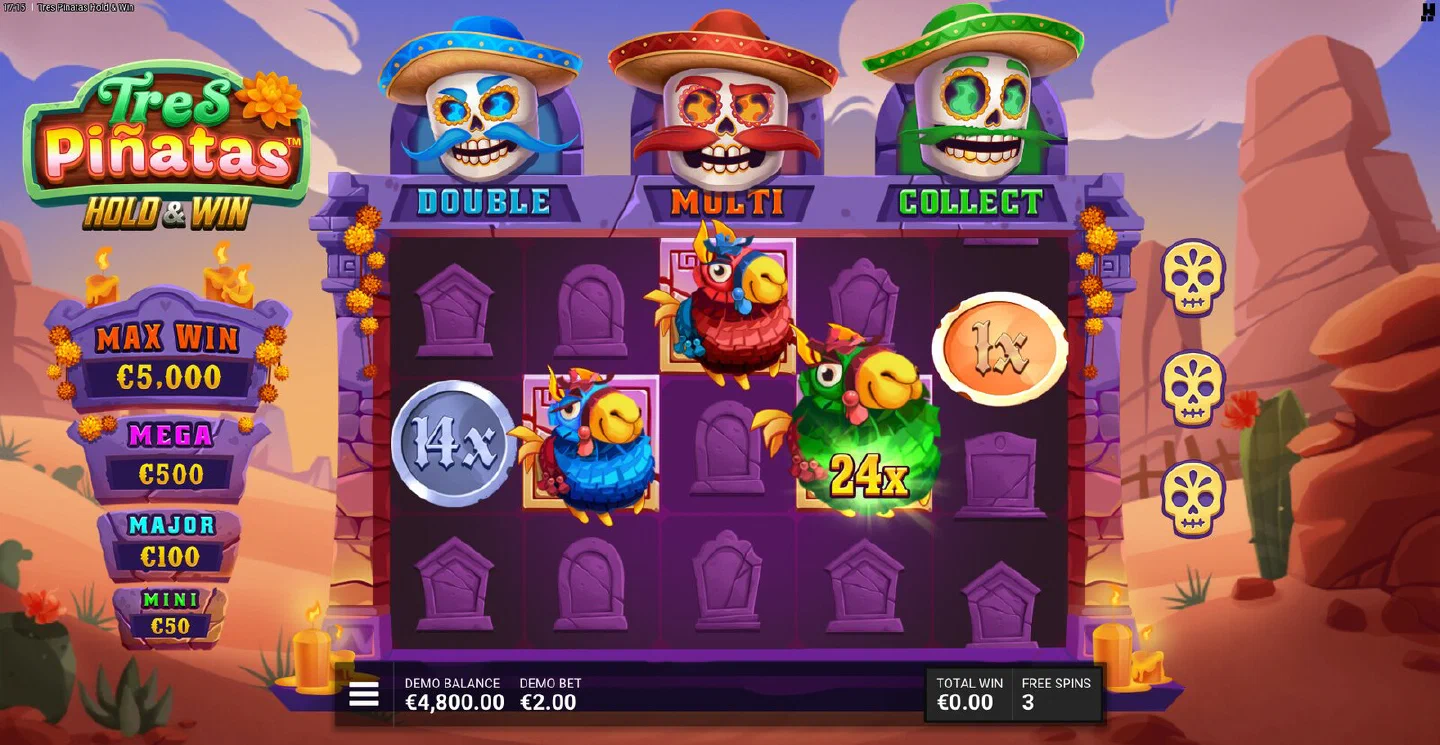
Inside the Piñata Party, three refilling lives and four kinds of symbol. Coins and Jackpots stick and refill the lives; Dead symbols spend them. The jackpot ladder runs Mini at 25x, Major at 50x, Mega at 250x and the Max Win rung at 2,500x, which is also the ceiling of the game and is reachable in every bonus mode.
The three purchase paths complete the picture, and they are the clearest example of the studio’s habit of pricing things openly. BonusHunt FeatureSpins costs 5x the stake per spin and stays on until you switch it off, making each spin ten times likelier to open the bonus. Mini Piñata Party costs 100x and guarantees 1 to 3 Piñatas on entry. Mega Piñata Party costs 200x for the narrower guarantee of 2 to 3. Their published returns, 96.28%, 96.28% and 96.34%, all sit at or above the 96.26% of the observed base build.
Note what that does to the usual argument about buy features. Where a purchase panel often means paying for convenience at a worse rate, here the numbers are printed and the rate holds. The strategy page works out what each door costs at real stakes, from €0.50 a spin at the bottom of the ladder upwards.
That is the whole design: one room, three colours, four rungs, three ways in. Nothing hidden, everything published, and a demo you can check it all in before a deposit.
The consistency is the point. Great Game Serengeti arrived a week later, on 10 September 2026, on the same 5x3 grid and the same 9 lines, with the same GAME INFO panel, the same autoplay limits and the same buy menu behind a different bonus. Learn the furniture once and the next title only asks you to learn its room. The hub page holds the rest of the coverage, and the alternatives page sorts out the other piñata titles that share the word but not the studio.
// FAQ